By Priyan R Naik
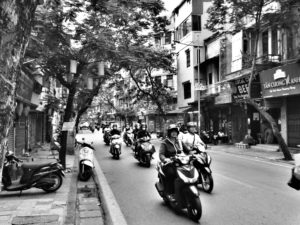
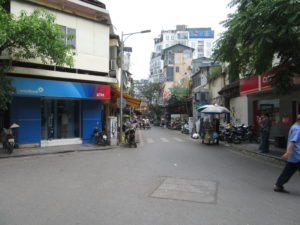
 Everyone who visits Hanoi, must visit Hanoi’s Old Quarter. This area, despite being crowded with new structures, continues to boast of traditions, activities and a way of life of people immersed in heritage and history prevailing from over a thousand years ago. To locals and visitors alike, it feels as though the 21st century knocks politely and then waits outside, even as the past and present live in messy harmony.
 The Old Quarter, once the commercial heart of Hanoi is actually a maze of 36 streets, each street dedicated to a specific trade or craft. Even today, street names echo their artisan legacy, silver street, silk street and so on, nowadays standing cheek by jowl with souvenir shops and sundry shops teeming with the kind of knickknacks, globetrotting tourists find attractive.
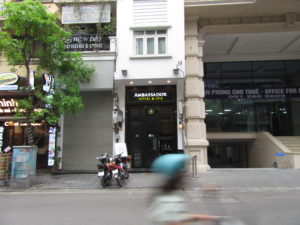
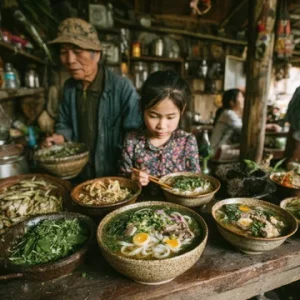 Not only did I want to visit the old quarter, I wanted to stay there as well and found the Ambassador Hotel, tucked at the fringe of this unruly historical core, fitting the bill. Engulfed in a world of incense smoke curling around contemporary neon signs, here centuries of memories live side by side with cracked colonial facades. Built in the old French style, my hotel had gleaming wooden floors, high ceilings, and shuttered windows that opened onto a street alive with sound. Dawn meant not alarm clocks, but the soft swish of brooms, the honk of scooters, and a low, rhythmic chant emanating from a nearby temple, blending with the laughter of vendors preparing for the breakfast rush. There were alleys and alleys, the walls stained with age and ivy, men playing chess on the footpath, toddlers chasing stray chickens, women squatting to peel mangoes with practiced grace.
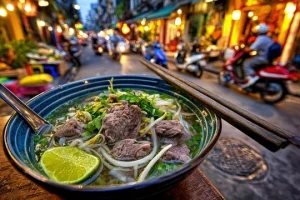
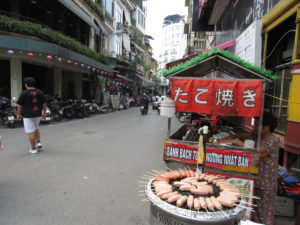 The morning air carried a tang of fermented fish sauce, the sweetness of caramelised chicken, the appetising smell of ‘pho’: a broth bubbling in battered pots. I followed my nose to a street-side vendor where a squat plastic stool and a bowl of ‘bun cha’ awaited: char-grilled chicken, fresh herbs, and vermicelli noodles in a sweet-savory broth. “Obama ate here,” the owner beamed. I didn’t ask for confirmation. The flavor was proof enough of its worth, even as I imagined President Obama sitting on his haunches, perched on that stool! And yet, at Hanoi’s Old Quarter there was this harbinger of change. Cocktail bars were peeking out from verandas, art galleries were blooming in old printing shops, the murals all adorned with hats, the conical hats of Vietnam, seen on most Vietnamese heads.
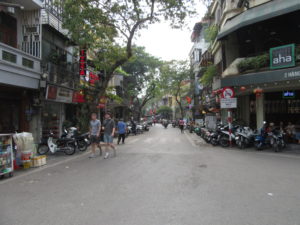 The area around Police Bazaar and the Laban ridge can be called Shillong’s old quarter with its beautiful maze of lanes and alleys coupled with a bunch of larger streets. Here melancholic colonial-era homes with tin roofs and mossy railings abound. Shillong’s misty mornings secrete an aroma of pine needles, the silence broken only by the clatter of church bells, here charming Khasi bungalows with lace curtains framed windows and wooden floorboards creak due to wear and tear. Shillong’s old quarter, unlike Hanoi’s, is quieter, less entangled with the city’s commercial life.
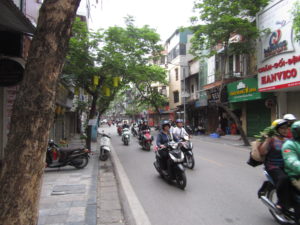 Hanoi’s Old Quarter is by contradiction noisy, chaotic, deeply historical, yet constantly reinventing itself to keep up with modern times. As I left Hanoi’s Old Quarter, its maze of motorbikes, sizzling street food and the constant hum of life clung to me like the scent of strong Vietnamese coffee. The tangled power lines, French shutters and temple incense told me a number of captivating stories. Wandering aimlessly on these ancient streets felt like walking through a living memory, chaotic, soulful yet endlessly human. I came here out of curiosity but left with a feeling of having known the city in a deeper, more intimate way. Hanoi didn’t just welcome me; it slowly succeeded in etching itself quietly and permanently into the corners of my heart.