




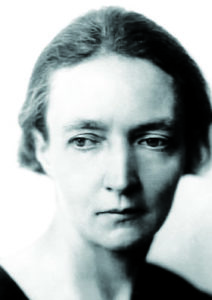
 The adage goes “like mother like daughter,” and in the case of Irene Joliot-Curie, truer words were never spoken. She was the daughter of two Nobel Prize laureates, Marie Curie and Pierre Curie, and was herself awarded the Nobel Prize in chemistry in 1935 together with her husband, Frederic Joliot.
While her parents received the prize for the discovery of natural radioactivity, Irene’s prize was for the synthesis of artificial radioactivity. This discovery changed many fields of science and many aspects of our everyday lives. Artificial radioactivity is used today in medicine, agriculture, energy production, food sterilisation, industrial quality control and more.
We are two nuclear physicists who perform experiments at different accelerator facilities around the world.
Irene’s discovery laid the foundation for our experimental studies, which use artificial radioactivity to understand questions related to astrophysics, energy, medicine and more.
Early years & battlefield training
Irene Curie was born in Paris, France, in 1897. In an unusual schooling setup, Irene was one of a group of children taught by their academic parents, including her own, by then-famous mother, Marie Curie.
World War I started in 1914, when Irene was only 17, and she interrupted her studies to help her mother find fragments of bombs in wounded soldiers using portable X-ray machines.
She soon became an expert in these wartime radiology techniques, and on top of performing the measurements herself, she also spent time training nurses to use the X-ray machines.
After the war, Irene went back to her studies in her mother’s lab at the Radium Institute. This is where she met fellow researcher Frederic Joliot, whom she later married. The two worked together on many projects, which led them to their major breakthrough in 1934.
A radioactive discovery
Isotopes are variations of a particular element that have the same number of protons – positively charged particles – and different numbers of neutrons, which are particles with no charge. While some isotopes are stable, the majority are radioactive and called radioisotopes. These radioisotopes spontaneously transform into different elements and release radiation – energetic particles or light – in a process called radioactive decay.
At the time of Irene and Frederic’s discovery, the only known radioactive isotopes came from natural ores, through a costly and extremely time-consuming process. Marie and Pierre Curie had spent years studying the natural radioactivity in tons of uranium ores. In Irene and Frederic’s experiments, they bombarded aluminium samples with alpha particles, which consist of two protons and two neutrons bound together – they are atomic nuclei of the isotope helium-4.
In previous studies, they had observed the different types of radiation their samples emitted while being bombarded. The radiation would cease when they took away the source of alpha particles. In the aluminium experiment, however, they noticed that even after they removed the alpha source, they could still detect radiation.
The amount of radiation decreased by half every three minutes, and they concluded that the radiation came from the decay of a radioisotope of the element phosphorus. Phosphorus has two additional protons compared to aluminium and was formed when the alpha particles fused with the aluminium nuclei. This was the first identification of an artificially made radioisotope, phosphorus-30. Because phosphorus-30 was created after bombarding aluminium with alpha particles – rather than occurring in its natural state – Irene and Frederic induced the radioactivity. So, it is called artificial radioactivity.
After her major discovery, Irene stayed active not only in research but in activism and politics as well. In 1936, almost a decade before women gained the right to vote in France, she was appointed undersecretary of state for scientific research. In this position, she laid the foundations for what would become the National Centre for Scientific Research, which is the French equivalent of the U.S. National Science Foundation or National Institutes of Health. She co-created the French Atomic Energy Commission in 1945 and held a six-year term, promoting nuclear research and development of the first French nuclear reactor. She later became director of the Curie Laboratory at the Radium Institute and a professor at the Faculty of Science in Paris. Medical uses of artificial radioactivity The Joliot-Curie discovery opened the road to the extensive use of radioisotopes in medical applications. Today, radioactive iodine is used regularly to treat thyroid diseases. Radioisotopes that emit positrons – the positive equivalent of the electron – are used in medical PET scans to image and diagnose cancer, and others are used for cancer therapy.
To diagnose cancer, practitioners can inject a small amount of the radioisotope into the body, where it accumulates in specific organs. Specialised devices, such as a PET scanner, can then detect the radioactivity from the outside. This way, doctors can visualise how these organs are working without the need for surgery.
To treat cancer, practitioners use large amounts of radiation to kill the cancer cells. They try to localise the application of the radioisotope to just where the cancer is so that they’re only minimally affecting healthy tissue.
An enduring legacy
In the 90 years since the Joliot-Curie discovery of the first artificial radioisotope, the field of nuclear science has expanded its reach to roughly 3,000 artificial radioisotopes, from hydrogen to the heaviest known element, oganesson. However, nuclear theories predict that up to 7,000 artificial radioisotopes are possible.
As physicists, we work with data from a new facility at Michigan State University, the Facility for Rare Isotope Beams, which is expected to discover up to 1,000 new radioisotopes.
While the Joliot-Curies were bombarding their samples with alpha particles at relatively low speeds, the Michigan State facility can accelerate stable isotopes up to half the speed of light and smash them on a target to produce new radioisotopes. Scientists using the facility have already discovered five new radioisotopes since it began operating in 2022, and the search continues. (The Conversation)
(Authored by Artemis Spyrou, Michigan State University and
Andrea Richard, Ohio University)

