



Achieving new heights through not one but two simultaneous awards in diverse fields, Assistant Professor Sumit Deb (SD) of St. Edmund’s College has drawn significant attention to both the institution and the state. He has been honoured with the Faculty of the Year award at LEAP2025 by the London School of Digital Business (LSDB), UK, and the Best Academician of the Year in Chemistry award announced by Scientific Laurels.
A resident of Laban, Deb completed his schooling in Agartala before studying Chemistry at St. Edmund’s College and earning his Master’s degree in Chemistry from NEHU. He joined the Department of Chemistry at St. Edmund’s College as a faculty member in 1993.
In this prestigious phase of his career, Sunday Shillong engages with the erudite professor as he reflects on his life’s moorings, his scholarly pursuits, and beyond. Excerpts:
SS: Congratulations Professor Deb on your recent accolades. What are your thoughts?
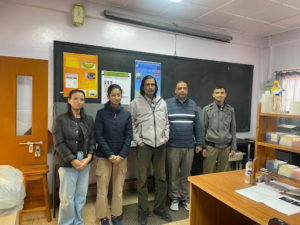
SD: I am profoundly grateful, deeply humbled, and truly appreciative to have been chosen for both the prestigious international awards. This recognition stands as a true testament to the work I have undertaken, strengthened by the endless guidance, support, and encouragement of my teachers, mentors, peers, colleagues, especially Dr. Samrat, as well as my friends and family. I offer my heartfelt thanks to the Almighty for his kindness, generosity, and unwavering blessings.
SS: You won, not one, but two awards for completely different genres – in the field of Chemistry and “Faculty of the Year” Internationally. Please tell us about it.
SD: The Award for Faculty of the Year at LEAP2025 was announced virtually on September 25, 2025, by London School of Digital Business (LSDB) UK. It celebrates exceptional academic leadership and recognises those who make significant contributions in the field of education, across the globe. There were nominations across 70+ countries, 400+ institutions with 750+ nominees that included senior academicians. For me, it’s an acknowledgement of what I have been doing over the years!
The Best Academician of the Year in Chemistry award was announced by Scientific Laurels, a prestigious international platform administered by Peritus Hive Research & Innovation LLP. It validates the pioneering research work on Environmental Biotechnology with special emphasis on Petroleum & Industrial Waste Bioremediation, Textile Dye and Heavy Metals Mitigation etc. It also recognises the importance of nurturing young minds and future generations.
Both the awards serve as a powerful symbol of recognition, credibility and authenticate my 32 years of teaching experience alongside two decades of active research on current environmental issues.
SS: With regard to pollutants from fossil fuels, what, according to you, is the biggest concern for ordinary citizens like us?
SD: The biggest concern about pollutants from fossil fuels and their exploration generates stubborn hydrocarbons and toxic by‑products that accumulate in the environment, quietly affecting human health and ecosystem stability over a long period. Our research team on bioremediation directly addresses these issues by using cyanobacteria and other microorganisms to degrade petroleum hydrocarbons, converting them into less harmful species. Our strategy on microbial and cyanobacterial bioremediation of heavy metals and toxic substances demonstrate how biologically based clean‑up systems could offer a sustainable alternative to conventional, chemical techniques and more resource‑intensive remediation methods.
SS: What would you advise citizens to be conscious about when pertaining to waste?
SD: Citizens should be less dependable on fossil fuels and emphasize more on microbial resources as they do not interfere in the food chain ecosystem. Moreover, less use of single-use plastics and non-recyclable materials, along with segregating waste at source into biodegradable, recyclable and hazardous fractions should be the top priority. Supporting local recycling efforts, composting organic waste, safeguarding water ecosystems with scientific protocols, greywater recycling may together mitigate the waste burden on mother earth, significantly.
SS: How has your teaching experience pushed you towards this momentous position?

SD: I am still a learner, I learn from my mistakes, I learn from my students.
My students are my life line and I have reached here because of my students. They (students) have motivated me to be different, forced me to think out of the box. I feel extremely satisfied when I see many of my dear students settling and doing great things. I have enjoyed teaching, mixing with young minds to sharpen my skills and thought process. Needless to mention that my family also helped me stay focused in academia as my three decades of teaching is being recognised.
SS: Tell us a little about yourself. Who is professor Deb beyond chemistry classrooms and laboratory experiments?
SD: I have engaged myself in community and institutional services as a secretary of managing committees for local school/College, treasurer for educational trusts body and cultural group organisation. Besides performing my duties as a teacher, I am involved in few administrative responsibilities such as IQAC Coordinator, Single Person of Contact (SPOC) for NIRF, IIC, AISHE, UGC, RTI and Anti ragging cell of the college. These tasks have helped me to understand the needs and requirements of the stakeholders, especially students, and society at large. I have also acted as a resource person for NCERT, IAS training at MATI, and remedial programs, while participating in national seminars and DBT, Govt. of India review meetings. I have multifaceted my involvement to support skill development and outreach activities in popularising basic sciences as a course to pursue aligned with recent developments in biotechnology and quality enhancement at the institution level.
SS: What has fueled your interest in the field?

SD: A combination of inspiring teachers, exposure to good laboratory practice, and the elegance of explaining everyday phenomena through interdisciplinary approach pulled me in this field. Over time, seeing how chemical principles underpin environmental protection, energy solutions and healthcare has kept that interest growing. Furthermore, interest in this field has been driven by experiencing how microorganisms, especially cyanobacteria, can naturally clean up some of the most persistent pollutants from environmental surroundings. Working on cyanobacteria-mediated bioremediation of hydrocarbons and textile dyes effluents showcased how environmental biotechnology strategies can convert waste into nontoxic by-products and offer sustainable solutions for ecosystems under stress. This aspect of the research continues to inspire deeper study in this arena.
SS: Do you have any regrets or lamenting thoughts regarding your work life?
SD: I have two regrets as I look forward to the future. First, significant members and influencers in my life like my parents and other family members are not physically present to witness this but I am certain they are all watching me. The other one is on the professional level, where I couldn’t deliver A+ grade from NAAC to the college in spite of being so close, being the IQAC Coordinator.
SS: What do you envision for the future of science and technological innovation in Shillong?

SD: Shillong has the potential to be a vibrant hub for interdisciplinary science which would address local needs such as sustainable resource management, environmental conservation and healthcare. Strengthening school–college–university linkages, nurturing start-ups, and creating shared research facilities will help young minds to contribute to national and global innovation while staying rooted in the region.
Subsequently, the vision for science and technology is to build a strong ecosystem where local problems become drivers of innovation. Shillong already hosts key institutions such as St. Edmund’s College, NEIGRIHMS, NIT, IIM, NEHU, NECTAR together can handhold and foster young researchers, start-ups and community projects focused on sustainable development for the region. A small but motivated initiative from the Government is highly appreciated.
SS: What is lined up in the future course of action for you?
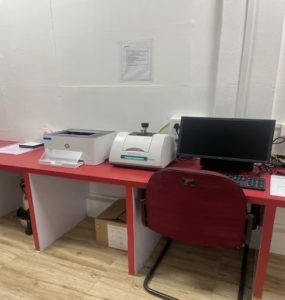
SD: Going forward, the focus shall be on mentoring more students into research, building collaborative projects which would address environmental and societal challenges, and integrating newer pedagogical tools into teaching. Future course of action is to expand work on cyanobacteria- and bacteria-based bioremediation of environmental pollutants. The field trials using co-cultures have already shown high degradation efficiency in laboratory studies with the development of a suitable photobioreactor. The patent filing is in the process. Alongside, the strategy is to strengthen the Advanced Biotechnology Research Facility at St. Edmund’s College so that more students participate in research on local environmental problems and translate these findings into scalable, community-oriented technologies.
—– End of interview—–
Beyond the classroom and laboratory research, Professor Deb has always enjoyed playing cricket and continues to do so with the faculty in his college. He also likes to cook because as he puts it “cooking good food is chemistry”. He is adored and respected by his students immensely as much as he is within the college. Through his momentous achievements, Professor Deb truly proves how hard work, prudence and talent when channeled through curiosity can reach great heights.
Interviewed by Esha Chaudhuri
