



Comics with a local twist lends young people a space to be heard
and express themselves, finds Esha Chaudhuri
When one thinks of comics, one thinks of portrayal of words and pictures in sequential form telling a story. They’re visual appeal and an intrinsic part of most childhoods. However, comics, as an art form, are used as a platform for storytelling to reflect the voices of young people – their perspectives, experiences, ideas, 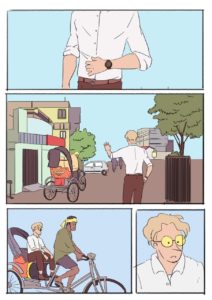 forwarding social change. Comic artists and creators approach this by sharing context based stories, and addressing issues such as bullying, peer pressures, hoping to reach a wider community of young readers.
Similarly, Half and One, since 2018 under Babatdor Dkhar, has been championing comics in Khasi and English to bring about transformational awareness and change among young minds. Half and One began as a literary publication, but it has steadily grown into something broader: a space where literature, illustration, comics, and now animation are treated as part of the same creative language.
The idea
Founder and creative director at Half and One says, “We’re not interested in chasing trends or algorithms. We’re interested in making work that holds, writing and visual storytelling that stays with readers, especially young readers, long after they’ve put the book down.”
 Dkhar’s idea is clear – Shillong is a place most people associate with music and mist rather than publishing and he’d like to see that change.
Storytelling can be simplistic and need not come from traditional centres of power to matter or travel.
Based out of Shillong, the platform publishes writers from across the world, Pushcart Prize winners, Emmy Award winners, and recipients of some of the most prestigious literary prizes alongside emerging voices, often in the same issue, without hierarchy.
“A defining part of Half and One is our use of original illustration. Every piece we publish is accompanied by artwork commissioned specifically for the text” says Dkhar.
 Explaining the illustrations, Dkhar says these aren’t decorative; they’re responses. “I see illustration as another form of reading that expands the meaning of the writing rather than explaining it.”
In a moment where AI-generated imagery is becoming the norm, their insistence on hand-drawn, human-made art is both an aesthetic and ethical choice. It reinforces the idea that storytelling is about intention, labour, and care.
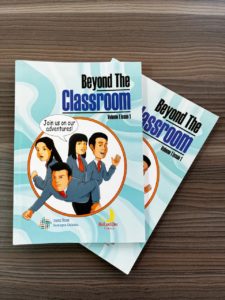
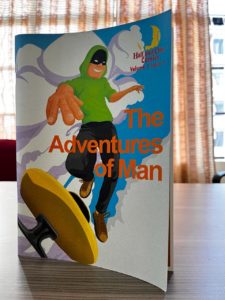
The same philosophy carries into their comic books, which are central to their work and to their engagement with young people. Titles like It’s A Kong’s World, The Adventures of Man, White Boy Hustle, and Beyond the Classroom aren’t genre exercises or superhero fantasies. They deal with power, education, gender, labour, belief, and identity and often through satire and discomfort. They’re rooted in lived realities in North East India, but they speak to global concerns without diluting themselves.
“I don’t believe in over-explaining stories for readers, especially young readers. Our comics trust their intelligence and curiosity.
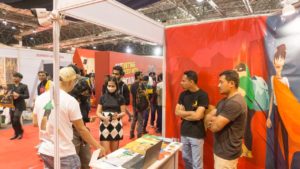
Because of that, these books have found audiences in schools, colleges, libraries, festivals, and cultural spaces across India and abroad. They give young readers permission to question the world around them and to see themselves reflected in complex, imperfect characters” says Dkhar.
 The comics – its stories and characters
Dkhar, who grew up reading Marvel and DC comic books, tried, failed and learned along the way. So far, under his guidance, Half and One have published three different comic books and a magazine. The Adventures of Man is a warm-hearted comic about a boy named Man and his everyday troubles. White Boy Hustle is a sharp black comedy following a protagonist from the West as he drifts across North East India. It’s A Kong’s World is a sharp, satirical comic centred on Kong, a single mother’s survival in society using humour to confront deeply serious social realities. Beyond The Classroom is an education-focused comic created for school students in Meghalaya addressing issues to learn beyond formal classrooms.
Describing the characters, the inspiration behind them and where they’re inspired from, Dkhar says, “In Beyond The Classroom, Kupar, Shweta, Mandakini, and Matsram are supposed to represent the demographics of our state.”
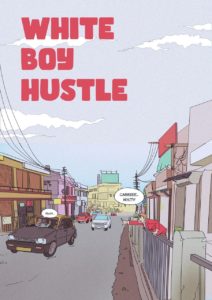 He further adds, “Kong and Man(Khasi name and pronunciation), and FJ the protagonist of White Boy Hustle is an inside joke.”
He credits Swapnil Tembe who greenlit the comic book when he was the head of the SSA in the Education Department, who understood the nuances. Dkhar also says that he tries to play around with the names of the characters, who are inspired by people that he meets and interacts with, giving them shape and the final versions.
Dkhar acknowledges the challenges that come forth where AI-generated imagery is becoming the norm, their insistence on hand-drawn, human-made art is both an aesthetic and ethical choice. However, he says that that reinforces the idea that storytelling is about intention, labour, and care.
 Dkhar believes that comics show us that children’s imagination is deeply visual, emotionally sharp, and far more complex than we often give it credit for. Young readers are comfortable holding humour, fear, confusion, politics, and empathy all at once, as long as the story feels honest and alive on the page.
Comics show us that children’s imagination is deeply visual, emotionally sharp, and far more complex than we often give it credit for. Young readers are comfortable holding humour, fear, confusion, politics, and empathy all at once, as long as the story feels honest and alive on the page.
Through his locally based comics, Dkhar’s endeavour gives the youth a space for expression, connecting and comprehending complexities of the world as they build empathy, encourage critical thinking, and often become a first gateway into reading, art, and storytelling especially for those who don’t see themselves reflected in traditional textbooks.
