




By Daniella Dawn Lyngwa
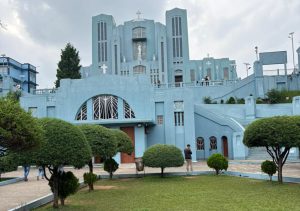
Shillong, the sound of church choirs, the rhythm of dhakdrums during Durga Puja, and the gatherings around Eid celebrations are all part of the same shared landscape. Churches, temples, mosques and Seng Khasi institutions stand alongside one another across the city, reflecting a way of life where religion is often experienced not through division, but through community. For generations, residents here have celebrated each other’s festivals, visited one another’s homes and built friendships across faiths.
At a time when religious tensions frequently dominate conversations across the country, many people in Shillong still believe the city has managed to preserve something rare — a culture of coexistence rooted in everyday life.
Religious leaders on coexistence
For Pastor Hunlang Chyne of the Church of Jesus Christ, Shillong’s identity has always been shaped by its peaceful and multicultural nature. He believes religion in the city remains relatively strong, though festivals are now increasingly viewed as social and cultural occasions as much as spiritual ones.
 “Shillong is unique because of its history, its music and its peace loving people,” he says. “People here have learnt to live with the dynamics of a pluralistic society.”
According to the pastor, churches today are not isolated spaces. Social issues are discussed openly from the pulpit, and engagement between communities is encouraged. He also feels younger generations are searching for authenticity rather than simply following rituals. In a city where ethnic identities and religious practices often overlap, coexistence has become part of everyday life.
That sense of shared belonging is echoed by Secretary of the Madhav Khola Dham Welfare Trust, Homnath Gautam.
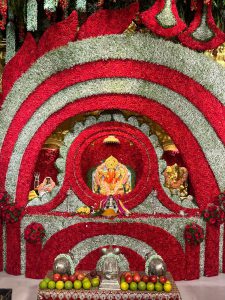
Gautam has witnessed Durga Puja celebrations in Shillong become larger and more organised over the years, with elaborate pandals, cultural programmes and growing public participation.
“Festivals create unity, friendship and understanding,” he says. “People from different communities visit the pandals and extend goodwill. That spirit of coexistence is what makes Shillong special.”
For Gautam, Durga Puja in Shillong is not only about worship. Food stalls, music, performances and social gatherings have turned the festival into a community experience that welcomes people beyond religion. He believes younger generations are still connected to these traditions through family involvement and cultural events.
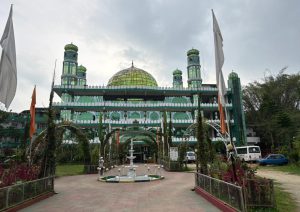
 Former Waqf Board member, Anwar Khan shares a similar view from within Shillong’s Muslim community. His family has lived in the city for four generations, and he says Muslims in Shillong have always balanced faith with coexistence.
“One thing I genuinely appreciate about Shillong is that festivals are rarely celebrated in isolation,” he says. “During Eid, neighbours from Christian, Hindu and Sikh communities visit our homes, share food and celebrate with us. In the same way, Muslims also participate respectfully in Christmas and Durga Puja.”
Khan believes the mosque functions not only as a place of prayer but also as a centre for charity, guidance and community support. He says people from different communities interact daily in markets, schools and workplaces, creating natural bonds that outsiders often fail to notice.
Still, he acknowledges that modern challenges exist. Social media, misinformation and political tensions from outside the state can sometimes influence how communities view one another. “Maintaining harmony today requires patience and willingness to understand different perspectives,” he says.
Memories from an older Shillong
Older residents of Shillong remember a time when these bonds felt even stronger.
Retired government employee, Esther Diengdoh recalls growing up in neighbourhoods where religion rarely created distance between people. “Neighbours knew each other well,” she says. “It was common to visit one another during Christmas, Durga Puja, Diwali or Eid regardless of religion.”
Her memories are filled with Christmas choirs, community feasts and evenings spent walking through brightly lit Durga Puja pandals with families from different backgrounds. According to her, respect for other faiths was taught quietly through everyday behaviour.
 “Parents encouraged us to greet neighbours during their festivals and never speak badly about another religion,” she says. “Faith was supposed to bring peace and kindness.”
Small business owner Rohit Banerjee remembers a Shillong where festivals belonged to entire neighbourhoods rather than specific communities. He recalls the excitement of Durga Puja preparations, the sound of drums echoing through the streets and Christmas evenings that transformed the city into what he describes as “something magical”.
“Life felt simpler then,” he says. “Relationships mattered more than differences.”
Like many others from his generation, Banerjee feels people today are busier and more individualistic. Community interactions are no longer as personal as they once were, though he believes Shillong still holds onto its spirit of harmony.
Retired professor Abdul Rahman Firdaus also remembers a more closely connected Shillong. During his younger years, neighbours supported one another during illness, funerals and difficult times without considering religion.
“That sense of solidarity was stronger than any differences,” he says.
Firdaus believes younger generations are growing up in a very different world shaped by social media and outside influences. Yet he still sees hope in Shillong’s culture of coexistence. “Faith should teach compassion and understanding,” he says. “If humanity remains at the centre, peace will survive.”
A younger generation shaped by diversity
Among younger residents, religion is often experienced through friendship rather than strict boundaries.
Anushka Kumari, who works in human resources, says growing up in Shillong naturally meant celebrating festivals from different religions because most of her friends belonged to different communities.
“I have attended Sunday mass at church and even visited a gurudwara,” she says. “Those experiences influenced me positively.”
For her, Durga Puja and Christmas are the city’s most inclusive festivals because they bring people together regardless of faith. At the same time, she feels social media has changed the way celebrations are experienced. “People are often more focused on posting pictures and videos than living in the moment,” she says.
Entrepreneur Daenya Wakor Pariat describes religion in Shillong as something that always felt safe. She says nobody made her feel judged because of what she believed in.
“People celebrated one another’s traditions naturally,” she says. “You didn’t just learn about another religion. You experienced it through friendships, food, conversations and celebrations.”
Her strongest memories are of Christmas gatherings where friends and family filled homes with laughter, music and shared meals. She believes friendships often create respect for another faith long before complete understanding arrives.
Advocate Rafiya Khan says religion while growing up in Shillong meant freedom and acceptance. As a Muslim, some of her favourite memories are connected to Christmas visits with family friends.
 “Shillong made religion feel more about becoming a better human being than about division,” she says.
However, she also points to changing realities. Social media, she believes, has increased misinformation and negative stereotypes, especially surrounding Islam. While incidents of discrimination remain rare compared to many places, she worries about the gradual rise of intolerance among younger people.
For Naphi Khongwir, who works at Vivanta, Shillong’s diversity taught her openness from an early age. She believes young people today mix more freely across religions because of education and wider exposure.
“Humanity and kindness matter the most,” she says.
At the same time, she stresses the importance of preserving Khasi traditions and indigenous beliefs alongside modern influences.
Across generations, despite differences in age, religion or background, one message emerges repeatedly from Shillong’s residents. Coexistence is not maintained through grand speeches or political slogans. It survives through ordinary acts of respect, shared meals, neighbourhood friendships and the simple willingness to celebrate one another’s lives.
In a world increasingly shaped by division, Shillong continues to hold onto the quieter belief that harmony begins with humanity.

