

Tradition, Thrill, and Thundering Hooves: West Bengal’s Moi Chara Cattle Race Festival
Date:
Share post:




Date:
Share post:
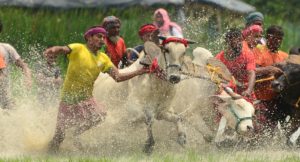 In the lush heart of West Bengal’s South 24 Parganas district, the village of Herobhanga comes alive each monsoon with the pulse of a centuries-old tradition—Moi Chara, a unique cattle race that fuses agricultural ritual with sheer spectacle.
 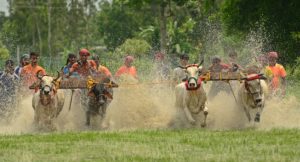 Held annually in mid-June or early July, just as the rains awaken the fields, Moi Chara is far more than a race. It is a cultural expression of rural resilience, a celebration of nature’s bounty, and a powerful symbol of the community’s deep-rooted bond with the land—and their cattle.
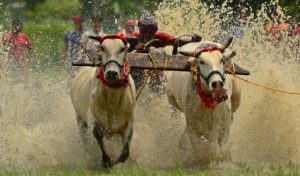 Moi Chara marks the beginning of the agricultural season. As the monsoon breathes life into the parched soil, villagers gather to rejoice, compete, and invoke a successful harvest. The festival is both a thanksgiving and a call to the elements—inviting rain, prosperity, and unity.
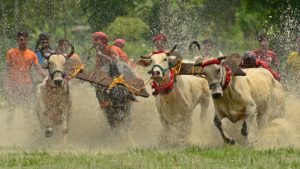 The name “Moi Chara” derives from the two key components of the race. Moi refers to the wooden plank fixed behind a pair of bulls, while chara denotes the actual race. Jockeys—typically the bulls’ owners—stand barefoot on a second plank, gripping ropes for balance as their animals surge through the muddy fields. The team that reaches the finish line first claims victory, but the real prize is in the shared pride and tradition.
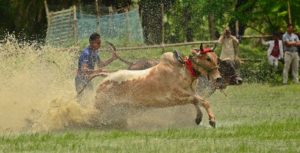 Organized entirely by local farmers, the event is a grassroots effort. Bulls are trained in advance, treated with reverence, and prepared like athletes. For many, these animals are part of the family—symbols of livelihood, strength, and status.
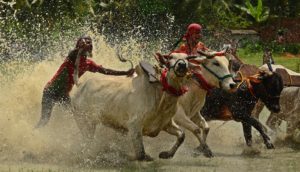 Moi Chara is more than a rural sport; it is a cultural ritual that brings together generations. Elders recount past races, children cheer from the sidelines, and the air is thick with music, excitement, and the unmistakable scent of wet earth.
Stay connected with us on our social media platforms for latest news, updates and promotions.
Since 1945, The Shillong Times has evolved from a weekly tabloid to a prominent daily, launching regional editions and embracing technological advances, consistently delivering news that matters to Meghalaya and beyond.

© 2026 The Shillong Times. All Rights Reserved | Crafted with IndoAge