




Aquiny B T Mawthoh explores the rise of edible insects, reflecting on ancestral traditions and how they could shape the future of food.
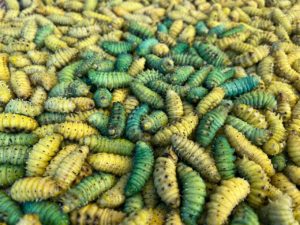 One Saturday evening, I strolled through the bustling lanes of Motphran, Iewduh, hoping to find some fresh vegetables for the week. As I wandered from stall to stall, my eyes fell on a middle-aged woman and a man selling greenish, yellowish silkworm ‘Niangryndia’ larvae and pupae. I remembered that they had probably been there for as long as I could recall, ever since I was young, yet I had never really paid them much attention before. They had laid out a plastic table cover on top of a wooden table to display the insects. My curiosity as an entomologist was immediately sparked, so I approached them and asked about the price. One of the women told me it was ₹300 per quarter , so I decided to buy about half a kilogram of niangryndia larva. My mother, who was walking beside me, felt disgusted just looking at the insects, let alone thinking about eating them. Although our state offers a variety of edible insects such as wild ’niangtaser, ’niangphlang,’ and ’niangkseh, as well as ’niangryndia and bee larvae, only a handful of people actually consume them. Among these, only eri silk/ niangryndia is being domesticated in our state. Like my mother, many experience food neophobia or outright disgust at the sight of these creatures.
 As the global population continues to rise, projected to surpass 9 billion by 2050, there is an urgent need for alternative food sources to meet the growing demand. Climate change and environmental degradation are further reducing food productivity. In the face of worsening resource shortages, several alternative foods have been proposed, with insects receiving significant attention. The practice of eating insects is known as entomophagy, and is widespread in tropical and subtropical regions across Latin America, Africa, and Asia. In India, insects are consumed primarily in the north eastern states, as well as in some parts of South India (Kerala, Tamil Nadu) and Central India (Madhya Pradesh, Chhattisgarh, Odisha). However, the rapid growth of industrial food production has largely removed them from our diets. Today, some of these edible insects are farmed commercially, and you can even find them processed into powders for easy incorporation into foods.
Edible insects are rich in protein, fat, and vitamins, and they demonstrate excellent production efficiency compared to other conventional food groups and their nutritional value can vary depending on diet, developmental stage, sex, species, growth environment, and measurement methods. Despite their immense nutritional benefits, consumer acceptance remains a significant barrier. Emerging technologies, such as food 3D/4D printing, could help overcome this challenge by producing attractive and nutritious insect-based foods that appeal to a wider audience.
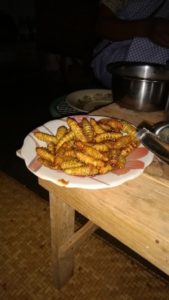 Compared to livestock, insects are far more efficient at converting feed into edible body weight. For instance, producing 1 kg of edible insects requires less than 10 liters of water, whereas chicken production requires around 2,300 liters per kilogram. Additionally, edible insects generate significantly lower greenhouse gas (GHGs) emissions. Many of these insects can also serve as feed for livestock. Species such as mealworms and black soldier flies can be reared on organic waste, though certification is necessary to ensure safety standards are met. Furthermore, the frass (insect waste) produced during rearing can be used in agriculture. Studies have shown that frass is rich in nitrogen and other essential nutrients that improve soil quality and promote plant growth. In addition to its nutrient content, insect faeces contain beneficial microbes that can help in the biological control of plant pests and diseases. Only that rearing edible insects requires suitable environmental conditions such as temperature and humidity, appropriate feed, water, and housing.
Visiting local markets
 The North Eastern states of India, including Meghalaya, are well known for their tradition of consuming a wide variety of edible insects, whether wild or domesticated. Some edible insects, such as the Eri silkworm, are reared in various districts of Meghalaya, including East Khasi Hills, West Khasi Hills, Jaintia Hills, Ribhoi and Garo Hills and they are not only reared for silk production but also for consumption as food. They can be found for sale in various local markets, including ’Iewduh, ’Iew Mairang, ’Iew Nongstoin, ’Iew Jowai and ’Iew Nongpoh.
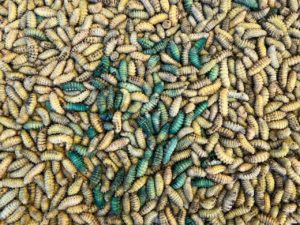 I visited a few locations where silkworms are sold for consumption and spoke with vendors. At Mothphran, I met Bah Banskhem Nongbri (36 years) and Kong Julie Kharbani (42 years), both originally from Nongstoin in West Khasi Hills, who were selling Eri silkworms. I asked them where they bought the Eri silkworms, and they explained that they source them from the Nongstoin market. They mentioned that earlier the market used to be bustling and busy, but nowadays it is much weaker because the prices have gone up. We continued our conversation, and I asked them about the types of customers they usually have, they said that people from both rural and urban areas buy these silkworms.
Later, I went to ’Iew Nongstoin, where I met two more vendors selling silkworms, Kong E. Jyrwa (45 years) and Kong Elizabeth Wanniang (60 years), both are also from Nongstoin. They told me that they purchase the worms from Shallang village in West Khasi Hills, from farmers who rear these silkworms at their homes. At ’Iew Nongstoin, the worms were being sold at ₹300 per kilogram, which is cheaper than the price at ’Iewduh.
Varied Recipes
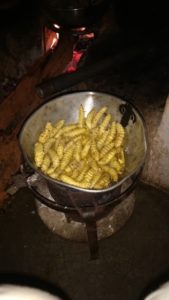 Speaking to some of the customers that I met at ’Iew Motphran and ’Iew Nongstoin, and most mentioned that they enjoy eating silkworms either by deep-frying them in oil with onions or by cooking them with vegetables. In both methods, the first and most essential step is to place the silkworms in plain hot water until they stretch out. After that, the head is pinched and given a slight twist to remove the skin or exoskeleton. Deitishisha Mawlong (25 years) from Mairang said she prefers eating them cooked with vegetables like potatoes. Eidahun Manners (50 years) and R. M. Khlem from Mynso B, West Jaintia Hills explained that they prefer eating silkworms in the form of a salad, by first boiling the worms, removing the skin, and then mixing them with onions and green chilies. Wanaibok Nongphlang (27 years) from Nongpoh said they usually eat silkworms by first washing and boiling them in plain hot water before roasting or grilling.
Sometimes, they simply roast the worms directly over the fire without boiling, removing the exoskeleton afterward. Lanangkersuk Hoojon (27 years) and Eureka Myrthong (27 years) from Nongstoin said they enjoy eating silkworms because of their crispy texture when fried. Fullmoon Lyngdoh (24 years) from Shohphoh (Mawphlang Block), East Khasi Hills, said he prefers consuming silkworms fried in oil. When asked why he likes them, he explained that he was first introduced to silkworms by a friend. After trying them, he enjoyed their taste and gradually developed a liking for them. Now, he buys them whenever they are available in the market.
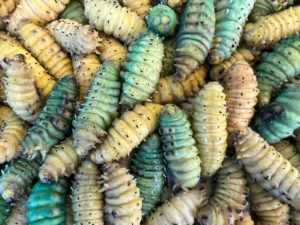 Bansumar Syiem (20 years) from Mawpat said he enjoys eating silkworms for their juiciness. He added that he also likes them in the form of pickles. To prepare the pickle, he explained, the worms are first washed in hot water, then dried in the sun. Once dried, oil is added, and the mixture is kept in the sun again to complete the process. When asked what consuming insects means to him, he replied that it reflects where they come from and is a part of their identity. When asked what consuming insects means to him, he replied that it reflects where they come from and forms a part of their identity. He added that it also reminds him of his grandfather, who first introduced him to edible insects, not only Eri silkworms but also many wild edible insects, teaching him not just how to eat them but also how to collect them.
Laitphar Syiem (27 years) from Mawpdang mentioned that he enjoys silkworms for their crispiness when fried or roasted, and for their juiciness when grilled or mixed with onions. He further explained that eating silkworms is not only about taste but also reflects their culture and ethnicity. For the people of the region, silkworm consumption is more than a food habit, it is a cultural practice deeply rooted in tradition. It represents a connection to ancestral ways of life, where locally available resources were used sustainably. Consuming silkworms is also linked with festivals, gatherings, and traditional meals, making it a meaningful part of their identity and heritage.
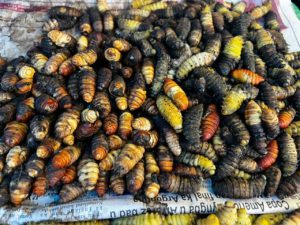 Speaking with a few people who felt uncomfortable or even intimidated by the idea of eating silkworms. Refica Shabong (27 years) from Golf Links, Shillong, said she feels disgusted by them because of their crawling nature and their prolegs. Dowellson Lyngdoh (51 years) from Jaiaw shared that although he had tried silkworms once before, he still finds them unappealing and does not like their taste. S. Thabah (55 years) from Smit and Seilang Mawthoh (35 years) from Laitkyrhong said they feel disgusted by silkworms because of their appearance. However, when asked if they would be willing to try insects in another form, such as paste or powder, they expressed openness to the idea. Tiplangki Suting (20 years) from Umpling shared that he is not willing to eat insects because he believes they are unclean and may carry various diseases. Sumimardor Suting (24 years) from Jowai said that he feels disgusted just by looking at them and does not want to eat insects, considering them unclean. Another customer, Frankincense Manners (25 years), mentioned that he is willing to eat only domesticated insects, but not wild ones, as he is concerned they might harbor diseases in their guts.
The global insect industry is witnessing steady growth, with applications extending beyond food, and its market value is projected to increase from USD 1.77 billion in 2025 to USD 9.14 billion by 2034. With the advent of new technologies, entomophagy has the potential to be revolutionised by transforming edible insects into more appealing forms for individuals with food neophobia, while also serving as a sustainable source of protein for the ever-increasing global population.
(The author is a PhD scholar at Lovely Professional University)

