




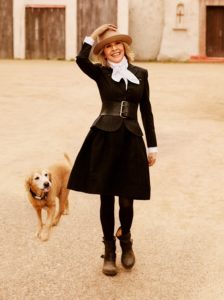
 American film actress Diane Keaton, who has died aged 79, was an icon of style but also character. She challenged the boundaries and range of what it was possible for women to play and be, especially in American cinema’s new wave of the 1970s and 80s.
Keaton was most famous for her performance as the title character in Woody Allen’s 1977 satirical romantic comedy-drama, Annie Hall. Her Annie could have been the love child of Katharine Hepburn and Charlie Chaplin.
She had Hepburn’s strength, intelligence, hair in a bun, and gender non-conforming trousers and tie; Chaplin’s comedy, goofiness and charm; and the idiosyncrasy of them both. Annie – like many more of Keaton’s characters – was kooky but smart, troubled and flawed, sweet but sensuous. And always endearing and complex.
Keaton won an Oscar for Annie. She physically overshadowed Allen despite being the same height (according to Allen), and her character’s awkward flirtatiousness, delight and curiosity balanced his character’s neurosis. Allen cast Keaton in eight of his movies and described her as, “with the exception of Judy Holliday”, “the finest screen comedienne we’ve ever seen”.
Keaton is better known as a comedian (or, as film critic Peter Bradshaw puts it, “a comic performer of ethereally self-aware genius”). But she had an impressive record in drama as well.
Five years before Annie Hall, Keaton played the marrying-in outsider Kay to the mob family in Francis Ford Coppola’s The Godfather (1972). She appeared across the trilogy opposite Al Pacino.
Speaking to US broadcaster NPR in 2017, she explained that she drew on her experience as a young woman on The Godfather’s profoundly male-dominated set to understand Kay’s experience in the similarly male mob world.
The same year as Annie Hall, Keaton played Theresa Dunn in the much darker Looking for Mr Goodbar. Theresa leads a double life. By day she’s a Catholic teacher and by night, she cruises bars and discos for casual and sometimes rough sex.
Adapted from Judith Rossner’s 1975 novel, the film has been criticised for crude sensationalism, but Keaton’s portrayal of Theresa’s desire was broadly admired. Sight and Sound, for example, called her performance impressive “mainly because her strength and sensitivity as an actress seem to be operating apart from the underdeveloped character she is playing”.
Keaton also starred alongside Warren Beatty and Jack Nicholson in Reds (1981), Beatty’s epic drama exploring political and personal commitment in the context of journalists’ engagement with the Russian revolution. Keaton played activist Louise Bryant, who leaves her family to join the political struggle and, let’s be honest, handsome journalist Jack Reed (Beatty).
New York Times journalist Alissa Wilkinson wrote of the performance: “We might not all be Reed, the charismatic idealist giving speeches, but we might be Bryant, just trying to catch hold as history barrels past and discovering who we are inside of it.
Keaton’s later career
It is an indictment of Hollywood that, as Keaton aged, her roles and films generally became more conventional and less challenging than some of her earlier work. That said, she admitted that her own confidence affected her career, mistakenly believing that “without a great man writing and directing for me” she was “mediocre”.
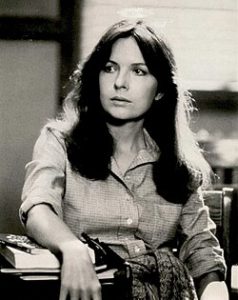 Despite this, she did find and create roles that continued to challenge expectations about how women can behave, and she made a series of successful collaborations with director Nancy Meyers.
In 1987’s Baby Boom, co-written by Meyers, Keaton played a career-committed businesswoman who inherits a baby that disrupts her life. Not only does she gradually cope, she eventually pulls off the hat-trick of growing her career, keeping the baby and snatching heartthrob Sam Shepard.
Keaton also starred in another tale of mainstream feminism triumphant, Meyers’ romantic comedy-drama Something’s Gotta Give (2003). Turning the tables on sexist stereotypes, Keaton’s successful playwright character “tames” playboy Nicholson while also attracting the much younger Keanu Reeves.
There is a sense that Hollywood couldn’t imagine Keaton’s early frisson in the body of an aging woman. But she carried on doing what she could from within these more tame and often liberal feminist comedy-dramas, which sought gender equality but never questioned structures that were fundamentally sexist.
Keaton’s legacy persists. Some of the most influential American women television and filmmakers of the 21st century have sought to take up the mantle of her complex characterisations of smart, awkward and unconventional femininity, including Lena Dunham and Greta Gerwig. And we will always have Diane Keaton’s back catalogue to remind us of Hepburn and Chaplin’s strange, poignant, funny love child. (The Conversation)

