

Lamphrangbor Nongspung captures the flavours of Christmas in Shillong, tracing its transition over the years and the modern twists that are shaping its celebrations.
 Christmas in Shillong has always been more than just a festival. For generations, it has symbolised community, faith, music, and open-hearted togetherness. However, as the city prepares once again for Christmas, many residents believe that the way the festival is celebrated today is vastly different from what it once was—more individualistic, more materialistic, and increasingly detached from its original spirit.
Those who grew up in the 1990s and early 2000s recall a very different Christmas. Almost every locality organised community carol singing and feasts, bringing together families, neighbours, and even strangers. Homes were open, and it was common for people to walk into unfamiliar houses, exchange greetings, and share food without hesitation.
Changing patterns or modern ways of celebrating?
 Today, that sense of collective celebration has largely faded, especially in Shillong’s urban areas. Christmas celebrations are now mostly confined within individual families. Community events have become rare, surviving only in a few localities on the city’s outskirts.
“The community spirit is really missing,” said a resident. “Earlier, Christmas belonged to everyone. Now, it feels restricted.”
Even neighbourly visits have declined. Many people admit that they no longer visit neighbours to wish them Christmas, something that was once a defining feature of the season.
Amid this shift, churches continue to remain the strongest bastions of community celebration. The Catholic Church, through its various parishes, still organises annual community feasts on December 26 or 27. Each household contributes, and parish members gather to celebrate together.
This practice continues in Presbyterian and other churches as well, offering a rare reminder of the communal essence of Christmas.
“These feasts are perhaps the last space where the old spirit of Christmas still lives,” said a parishioner.
 Many observers feel that Christmas in Shillong has increasingly become material-centric. Instead of solemnly celebrating the birth of Jesus Christ, the focus has shifted to food, parties on Christmas Eve, expensive clothes, and lavish spending.
As economic prosperity has grown in the city, Christmas celebrations have also become more business-oriented. This has led to visible disparities, with class divisions now glaringly evident—even through clothing choices during the festive season.
In some households, Christmas is no longer celebrated together. Parents may celebrate at home, while children prefer to spend the day at friends’ houses. This fragmentation, residents say, reflects the broader shift in social values.
The younger generation, often labelled as Gen Z, is frequently blamed for these changes. However, many argue that they should not be faulted. “They never experienced the community-driven Christmas of the past,” one observer pointed out. “They are only mirroring what they see today.”
Former Pastor Rev. Kyrsoibor Pyrtuh believes youth experimentation is natural and should not be subjected to moral policing.
“At the same time,” he cautioned, “misbehaviour such as public drinking, drug use, rash 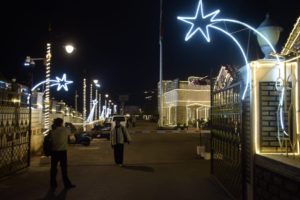 driving, violence – especially against women cannot be justified.”
He stressed that women and young girls must feel safe during the festive season and that Christmas should give hope and assurance to the youth about a secure future.
Former Minister Paul Lyngdoh highlighted Shillong’s unique historical and cultural foundation. When Welsh missionaries arrived in the Khasi Hills in 1841, Shillong, emerged as the first town and capital of undivided Assam.
According to him, the establishment of colonial offices, educational institutions, and Christian missions led to a silent yet powerful transformation. English education flourished alongside Christianity, and music became an inseparable part of local life. “Christmas carols echoing through the hills became Shillong’s identity,” Lyngdoh said, describing a tradition unmatched elsewhere in the country.
Lyngdoh reminded the youth that Christmas teaches humility, drawing lessons from Christ’s birth in a manger—marked by poverty and simplicity, not privilege.
Senior political leader Ampareen Lyngdoh described Shillong as a city built by close-knit families bound by common faith and belief.
 “All festivals here—religious, musical, or social—stir emotional connection and comradeship,” she said.
She acknowledged that modern influences cannot be avoided, especially among youth shaped by media and global culture.
However, she stressed that Christmas must remain centred on the birth of Christ, which is to be revered and worshipped.
Vicar General of the Archdiocese of Shillong, Fr Richard Majaw, echoed similar concerns.
“Christmas is a festival of joy and hope,” he said, reminding that it symbolises divine redemption. “Our youth often confuse a religious festival with a worldly one.”
He urged young Christians to carry the message of Christmas in their celebrations and avoid drunkenness, chaotic road activities, and late-night revelry in the name of festivity.
Christmas decor & flamboyance
Meanwhile, Christmas decorations have evolved significantly over the years. Earlier, most families hung a star outside their homes, while those who could afford it, put up a modest Christmas tree.
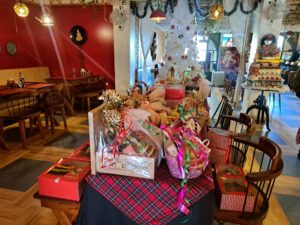
Today, Shillongites are willing to spend considerably more on decorative lights, ornaments, and customised décor. Shillong Pixels Gifts, based in Motinagar, reports strong demand for personalised Christmas ornaments.
 “We customise each item with names or messages, making every piece unique,” a representative said.
They observed that people now seek decorations that feel meaningful and personal, blending tradition with individuality rather than mere display.
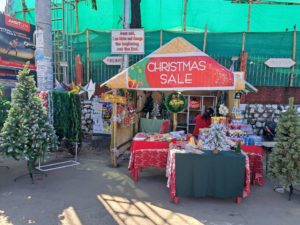
Similarly, a makeshift decoration shop at Don Bosco Square reported high demand for red, gold, and white decorative balls and bells. Christmas trees priced between Rs 2,400 and Rs 14,000 are selling well, reflecting increased spending.
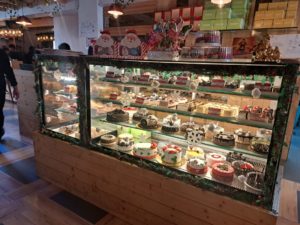
Moreover, Cakes remain central to Christmas celebrations. Traditionally, fruitcakes dominated the season. Today, designer and customised cakes are increasingly popular, driven by social media trends and online ordering.
 Bread Café reported strong demand for traditional Plum Dundee cakes alongside flavours like popular bakery and café in Shillong, Bread Café, said that the Christmas fever has well and truly set in across the city. According to the café, the highlights of the season continue to include the traditional Plum Dundee fruit cake, which remains a favourite among customers.
“Christmas delights have not changed drastically,” said Rashi Vaswani of Bread Café, Laitumkhrah. “What has changed is the demand for vegan and gluten-free options, along with improved packaging, fancy bakes, and the growing popularity of online ordering and delivery services,” Vaswani said.
Meanwhile, home baker Ribahun Tynsong said that Christmas delights have changed significantly over the past decade, largely driven by trends and social media influence.
“Much of it is about trends and social media competition,” she said. “Earlier, Christmas  delights were valued more for tradition, but today this shift has also helped expand opportunities for small entrepreneurs and home bakers, creating space for small enterprises to grow.”
Dolcebacio Artisans Bakery said that this Christmas season is all about warm, comforting flavours presented with elegance.
It stated that customers are leaning towards festive spices, fruits, and nostalgic desserts, but with refined presentation. There is also a strong emphasis on treats meant for sharing with family and friends, whether at home or as gifts.
Similarly, Amebada L Sawkmie, owner of Sliz Munchin Bakery, said that this year’s Christmas cake highlights blend traditional flavours with modern twists. The focus remains on rich fruit cakes, decadent chocolates such as truffles and Black Forest, and vibrant Red Velvet cakes, often prepared using whole wheat or eggless bases.
“In my perspective, it is the season itself that makes these cakes special. Some bakers in Shillong have also begun incorporating local ingredients such as Sohra cinnamon, local wines, and family recipes soaked in rum or brandy.”
 According to her, Shillong’s Christmas cakes today represent a beautiful fusion of British baking traditions and unique Khasi elements, enriched by local love and festive spirit. Beyond Shillong, villages like Moolamylliang in East Jaintia Hills have gained recognition for their community-driven Christmas light initiatives, which began in 2019 to promote tourism.
Although this year’s extravaganza has been cancelled due to poor road conditions, the initiative stands as an example of how community-based celebrations continue to thrive in rural Meghalaya.
With only days left for Christmas, Shillong’s markets are buzzing with activity. Heavy footfall and traffic congestion have been witnessed from IGP Point to Police Bazaar or Khyndai Lad, as residents step out for last-minute shopping.
Decoration shops are crowded, and the city is gradually taking on a festive glow. Streets and public spaces are adorned with lights and ornaments, reflecting the excitement of the season.
Shillong still celebrates Christmas with lights, music, cakes, and cheer. Yet, beneath the festive glow lies a collective yearning for the warmth, openness, and togetherness that once defined the season.
As the city prepares to celebrate the birth of Christ, many hope that Christmas in Shillong can once again move beyond materialism—rekindling the spirit of community, humility, faith, and shared joy that once made it truly special.



