




In Shillong’s cafés, stories are poured as gently as coffee, and connections linger long after the cups are empty.
By Marbareen Khonglam
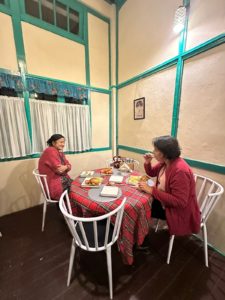 There is something quietly comforting about stepping into a café. The door opens, a small bell rings, and for a moment, the noise of the street fades. The scent of freshly brewed coffee lingers in the air. Cups meet saucers with a soft clink. Conversations overlap — some animated, others hushed. In these spaces, life does not feel hurried. It unfolds slowly, across tables and between sips.
While Shillong has long had tea stalls and local eateries, the rise of modern café culture began gaining visible momentum in the early 2010s. Around 2012 onwards, cafés started appearing more frequently across the city, reflecting changing lifestyles and an emerging youth culture. Social media further influenced this shift, reshaping how young people chose to meet and socialise. What began as a novelty gradually became part of everyday life. Today, cafés are firmly woven into the social fabric of the city.
 Yet beyond menus and interiors, it is conversation that defines these spaces.
On any given afternoon, a table of university students might be discussing exam results, scholarship applications or plans to move outside the state. At another, two friends lean closer, speaking softly about heartbreak, family tensions or career uncertainty. Nearby, young professionals exchange ideas about start-up ventures, community projects or workplace frustrations. Some conversations are light — music, films, weekend plans. Others carry weight — mental health struggles, identity, ambition and doubt.
Cafés matter because they offer neutral ground. They are neither home nor office, neither classroom nor formal meeting room. In a café, there is little pressure to leave quickly. A single cup can stretch into hours of dialogue. In that unhurried atmosphere, difficult topics often become easier to share.
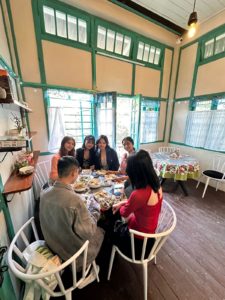 Samantha Kikon, a regular café-goer, remembers celebrating her graduation in one such space. What stayed with her was not the food, but the lengthy conversations about the future — dreams, anxieties and the uncertainty of adulthood. “You’re not rushed,” she says. “You can just sit and talk.” For her, that simple freedom creates room for honesty.
Mawi Samte describes cafés as places that allow both companionship and solitude. Some days she meets friends to speak openly about work pressures and personal challenges. On others, she sits alone, reflecting quietly while surrounded by the gentle hum of other voices. Even in silence, there is comfort. The shared space creates a sense of belonging without intrusion.
For Adrian Kharbyngar, cafés have become informal meeting grounds where ideas are shaped. Casual discussions about music or local events can quickly deepen into conversations about community concerns or creative ambitions. Daphne Nongbet recalls a spontaneous poetry reading during one visit, when strangers paused to listen and exchange thoughts. In such moments, cafés transform into small cultural spaces that encourage dialogue and expression.
Behind these spaces are owners who understand that a café is built on more than décor or design. The owner of The Farraway Café traces her inspiration back to childhood, watching her mother cook with care and love. For her, food has always been a way of bringing people together. Opening her café was not simply about starting a business; it was about creating a space where that same warmth could be felt. Over time, she noticed that customers were seeking more than a meal. They were looking for a feeling — something genuine and personal.
 She observed café culture in Shillong begin to shift as people grew more adventurous with their tastes and more open to gathering socially. Dining out became less about convenience and more about experience. “You can get a cup of coffee anywhere,” she reflects, “but you can’t get a feeling everywhere.” It is that intention — food prepared with heart, served in a space designed to encourage conversation — that keeps people returning.
At Secret Story Boutique Café, they share a similar understanding. For them, ambience is not simply about aesthetics, but about comfort. It is the first thing a guest feels when walking through the door. A well-designed space can invite conversation, but warmth is what sustains it. They believe that when a café feels like a home away from home, people naturally open up and connect more deeply.
 Of course, café culture today is not untouched by modern influences. Social media has introduced a visible “see and be seen” element, especially among younger visitors. Beautiful interiors and carefully plated dishes often find their way onto screens. Yet while the “Instagrammable” quality may draw attention, it is rarely the reason people return. What lingers is the atmosphere, the kindness of staff, the comfort of familiarity.
In an age dominated by digital interaction, cafés offer something tangible. Eye contact across a table. The warmth of shared laughter. Conversations that unfold without the interruption of notifications. They create a gentle rhythm — one that encourages people to slow down, to listen, to be present.
Because where coffee meets conversation, something subtle happens. Time softens. Words linger. And in those simple, everyday moments, Shillong feels a little closer — stitched together by shared tables, warm cups and stories still being told.

