




Dr. Manash P Goswami
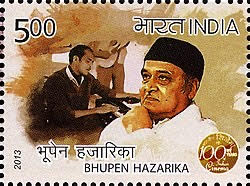 Some songs go beyond being just melodies — they become stories, memories and emotions that outlive generations. One such song is Shillongore Monalisa Lyngdoh, written by Bharat Ratna Dr. Bhupen Hazarika and composed by his younger brother Jayanta Hazarika. The song continues to strike a chord with people across the North East and beyond decades after it was first recorded. It is not only a tale of romance but also a celebration of love, humanity and the power of music to bridge divides.
Shillongore Monalisa Lyngdoh is about a tender love story between an Assamese young man and a Khasi girl named Monalisa. She is portrayed as a beautiful, free-spirited young woman who strums her worn guitar and sings the songs of the hills. The boy, enchanted by her presence, pours his feelings into tender words of affection, reverence and a quiet yearning that remains unspoken.
 The beauty of the song lies in its universality. It speaks to anyone who has ever experienced the ache of distance, the joy of companionship or the magic of music bringing two people together in the lyrics of the song to describe Monalisa and Shillong. The lyrics remind us that love does not ask for identity or bow to social categories.
One of the most fascinating aspects of this song is how it came to life. At the temporary studio of HMV in Guwahati in 1972, his brother Jayanta Hazarika and a team of musicians waited the whole day for Bhupen da to arrive. The plan was to record a new song, but Bhupen da had not yet written it. He walked into the studio in the evening around 8 p.m. and asked, “Are we ready to record?” to all in the studio. His brother Jayanta, being irritated, asked him, “How can we be ready as you haven’t even given us the song yet!” Bhupen da smiled, sat down with a pen and paper and replied, “Alright then, I’ll write it now, and you can set it to music.”
What followed was nothing short of magic. Sitting downstairs, Bhupen da began writing line by line. As soon as he finished four lines, he sent them upstairs to Jayanta, who instantly composed the music with the waiting musicians. This back-and-forth process — words flowing from one floor, melodies rising from another — gave birth to the iconic song Shillongore Monalisa Lyngdoh. It was spontaneous, raw and electric in its creation and a true testament to the genius of the Hazarika brothers.
In the song Shillongore Monalisa Lyngdoh, Bhupen Hazarika captures the spirit of the Khasi Hills that engrosses with music, rains, pine forests and youthful energy. The girl called Monalisa, strumming her guitar, becomes a symbol of Shillong itself — vibrant, musical and full of life. Sunday mornings on Shillong Peak, gentle drizzles and melodies floating through the mist are not just descriptions in a song, but experiences etched in the memories of anyone who has ever called Shillong home.
The song makes Shillong live on in the imagination of listeners. For many non-native people, especially those who studied or worked there, it evokes a deep nostalgia for friendships, romances and the cultural mingling that defined their youth. The song also became a beloved tune celebrating their city and its beauty for the Khasi and Jaintia people.
The song about love rising above social and cultural boundaries makes Shillongore Monalisa Lyngdoh so enduring. The romance between an Assamese boy and a Khasi Christian girl, which could have been seen as unconventional in its time. Yet in the song, there is no fear or hesitation. Instead, there is affection, respect and the willingness to meet “halfway.”
One of the most touching parts of the song is the proposal of meeting at the midway town of Nongpoh on the road between Guwahati and Shillong. This image of two lovers agreeing to meet halfway is more than a geographical reference. It is a metaphor for human relationships. It reflects that love and harmony flourish when we are ready to walk part of the distance to reach out with openness, trust and the willingness to meet the other halfway.
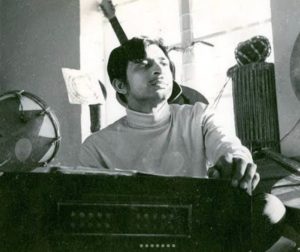 Many listeners believe that the emotions in the song reflect the personal experiences of Bhupen da. He had developed deep bonds with the city and its people as he spent significant time in Shillong. The lyrics carry the tenderness of someone reminiscing about cherished days while walking in the mist, music shared with friends, moments of intimacy and laughter.
Monalisa Lyngdoh, the character, may or may not have been real. But as she comes alive in the song, she represents every muse, every lost love, every memory that lingers in the heart. Through her, Bhupen da speaks of the universal truth of longing — the kind that makes us human.
Over the years, Shillongore Monalisa Lyngdoh has become more than just a melody. It is now part of the shared cultural treasure of the North East. People across communities have embraced the song and made it a bridge of harmony.
Padmashri Dr. Helen Giri, musicologist and former professor at North-Eastern Hill University, once beautifully remarked, “Monalisa Lyngdoh needs to play on and on and on.” For her, the song was not only poetry and music, but also history. It tells human emotions more powerfully than any textbook.
Similarly, All India Radio once produced a special radio feature titled Monalisa – A Girl, A Song And A Dream, which highlighted the charm and impact of the lyrics of the song. The feature, which explored the lyrics, the music and the cultural ambience of Shillong, was broadcast nationally and later won the prestigious Public Service Broadcasting Award in 2015. For many who heard it, the programme was a reminder of how one song can embody love, art, and shared memory.
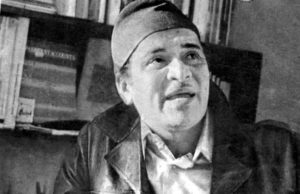 More than five decades have passed since that night when Bhupen Hazarika sat with his pen and paper in Guwahati and created this song. Yet it remains as fresh and relevant as ever. Its themes — love, humanity, and the courage to embrace difference — are timeless. In today’s world, where divisions often make headlines, Shillongore Monalisa Lyngdoh gently reminds us of the values that unite us.
The guitar that Monalisa strums may have been old and worn, but the music it produced is eternal. The drizzle on Shillong Peak may have fallen decades ago, but its memory still moistens the hearts of those who listen. The idea of meeting halfway, at Nongpoh or anywhere else, continues to inspire us to step beyond ourselves and embrace the other. He made people believe in hope, unity and compassion with his song.
It is not just a song of one boy and one girl. It is a song of every human who has loved and longed, of every community that has shared a bond and of every generation that has believed in the healing power of music. It shows us that true art does not divide — it unites. True love does not ask for identities — it simply flows.
———–X———–
(The author is a Professor and Head in the Department of Journalism and Mass Communication, North-Eastern Hill University, Shillong.)

