



Daniella Dawn Lyngwa on Shillong’s changing landscape and shrinking forest cover.
Shillong, often called the ‘Scotland of the East,’ has long been defined by its rolling green hills, dense forests, and cool, tranquil air. Its identity is deeply rooted in nature, offering a sense of calm and balance to both residents and visitors. In the present day, however, that identity is steadily shifting. Rapid urban growth, rising population pressures, and expanding construction are eroding the city’s green cover. These transformations are increasingly difficult to ignore.
Satellite studies indicate that dense forest cover in the East Khasi Hills has declined sharply over the past two decades, as urban expansion and agriculture fragment what was once continuous greenery (Journal of Environmental Studies 2022). What remains are scattered patches such as sacred groves, hillside vegetation, and isolated urban trees that are struggling to survive.
Recent data reinforces this trend. Between 2021 and 2023 alone, Meghalaya lost over 84 square kilometres of forest. Over a longer period, from 2001 to 2024, the state has lost approximately 240,000 hectares of tree cover—about 14% of its 2000 baseline—along with a 23% decline in primary forests (Global Forest Watch). Despite this, experts note that Meghalaya’s forests remain relatively more resilient compared to other northeastern states.
Director of Jiva Resort, Jiwat K. Vaswani observes Shillong’s transformation firsthand. ‘Over the years, Shillong has slowly lost its green cover, whether due to unplanned urbanisation, increasing construction, or lack of collective responsibility,’ he says.
He stresses that development is necessary, but it should not come at the cost of nature. ‘Once green spaces are lost, they are difficult to restore. What we preserve today is a present for the next generation.’ Protecting Shillong’s forests is about preserving the city’s identity, its calm, and its cultural memory, so future generations can experience what older residents remember.

Geography teacher, Phinda Jyrwa notes that the losses are no longer abstract. ‘There is less fresh air, rising temperatures, and even water scarcity in some areas,’ she explains. Springs that were once perennial now trickle inconsistently or dry up completely.
Those who have grown up in Shillong speak of a tangible change. Former Forest official, Naba Bhattacharjee, recalls a city where greenery was everywhere. ‘During the last two decades, the momentum was much more,’ he says. ‘The vegetative cover is disappearing, not just in isolated pockets, but across the wider urban region, including important catchment areas.’
Human activity lies at the heart of this transformation. Tree felling for timber and fuel, shifting cultivation, expanding infrastructure, and unregulated mining – particularly coal extraction and quarrying have all contributed to forest degradation (Forest degradation analysis, 2003–2011, International Journal of Science and Research).
While shifting cultivation continues to clear land, commercial agriculture and urban development are accelerating the pace of loss. Similar patterns across northeastern cities suggest that Shillong’s experience is part of a broader regional trend of environmental strain.
Much of Shillong’s remaining greenery is under fragmented control. Only about 4% of forested land is under direct government oversight; the rest is managed by local councils or traditional authorities, making coordinated conservation difficult.
Despite government-led plantation drives and projects like Green Meghalaya+ and the Community-Led Landscape Management Project (CLLMP), which aim to restore forests with community participation (Meghalaya afforestation initiatives, Green Meghalaya+, CLLMP reports), enforcement remains inconsistent.

Rules exist but are often not applied, leaving forests vulnerable to unchecked logging and land conversion. Restoration projects focusing on land damaged by mining have already recovered 672 hectares, while over 10,000 hectares of forest have been rejuvenated through community involvement (World Bank).
Environmentalist and social activist,H.H. Mohrmen states that the problem extends beyond the city. ‘Even in villages, green spaces are being taken over, whether for housing, farming, or other purposes,’ he says. Logging for firewood remains widespread, particularly in rural areas where households rely heavily on wood for cooking and heating. ‘There is no real control in the cutting of trees,’ he notes.
Traditional land ownership norms exacerbate the situation: many feel that what grows on their land is theirs to use, often overlooking broader ecological consequences. Low awareness about forest conservation means that even as rules exist, compliance is sporadic, and the pace of environmental loss continues unabated.
The effects of this decline are deeply tangible. Reduced tree cover contributes to rising temperatures, diminished air quality, and a general loss of calm that once defined Shillong. Water resources are directly affected: forests act as natural reservoirs, regulating streams and springs, so their absence leads to irregular water supply and shortages for domestic and agricultural needs. Soil erosion intensifies on treeless hillsides, compromising fertility and increasing the risk of landslides. Wildlife loses habitat, biodiversity declines, and natural buffers against extreme weather weaken.

A frequent visitor and nurse from Tezpur, Sneha Basumatary says, ‘There is more concrete than trees now. Shillong has become warmer than before, and there are fewer spots to just sit, think, and breathe. The natural beauty feels like it is being traded off.’ Everyday life is affected as traffic grows, construction continues unabated, and quiet green spaces vanish.
Local efforts provide some hope. Environmental scientist, Dr. L. Iangrai emphasises combining policy, community engagement, and sustainable land practices. She highlights afforestation, reforestation, and stricter enforcement against unregulated mining, as well as promotion of sustainable farming like agroforestry over shifting cultivation.
Sacred groves and traditional conservation methods remain vital, while awareness campaigns instill a sense of responsibility among citizens. ‘Community participation is vital,’ she says. ‘When people see value in preserving their forests, the impact is far greater than policy alone.’
Projects like Green Meghalaya+ and CLLMP empower communities to restore forests, conserve land, and protect ecosystem services, while financial schemes such as Payment for Ecosystem Services (PES) reward individuals and villages for conservation efforts (Community forest governance study, PMC, National Institutes of Health database).
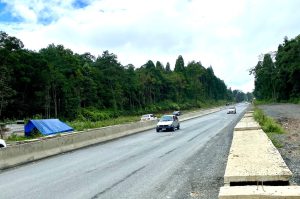
The decline of Shillong’s green spaces reflects a wider pattern across Meghalaya; driven by deforestation, urban expansion, and extractive practices, alongside natural pressures such as heavy rainfall and soil erosion. Its effects are already visible in rising temperatures, water scarcity, and the disappearance of quiet, restorative spaces.
Yet, this is not a story of irreversible loss. Community-led initiatives, traditional conservation practices, and emerging environmental policies offer a path forward. With thoughtful urban planning, stronger enforcement, and active citizen participation, Shillong can still protect what remains and begin restoring what has been lost.
The stakes extend beyond ecology. Preserving Shillong’s forests means safeguarding its identity, its cultural memory, and the sense of place that has defined it for generations. Without action, the city risks losing not just its trees, but the very essence that once set it apart.
