



‘I will jump into the pool next year’, says Assam Chief Minister Himanta Biswa Sarma while attending the Festival in Jowai
JOWAI, July 9: From Lionel Messi and Cristiano Ronaldo to messages promoting healthy living, discouraging alcoholism and warning against children’s growing addiction to mobile phones, the towering rots of this year’s Behdienkhlam festival reflected a unique blend of tradition and contemporary concerns.
The colourful social messages accompanied centuries-old rituals as large crowds thronged the sacred Aitnar pool in Jowai on Thursday for the grand finale of Meghalaya’s iconic four-day indigenous festival of the Pnar community, popularly known as the “four days and three nights” festival.
Against the backdrop of rhythmic drumbeats, traditional pipes and chants, the festival reached its climax with elaborately decorated rots from different localities being carried into the muddy waters of Aitnar. Various religious rituals were performed during the four days, including offerings and prayers, the completion of Siang ka Pha, the carrying of the Symbood Khnong and Khnong Blai, Deikhlam, Bam Tyngkong and other customary rites conducted by the Dolloi of Elaka Jowai, the Langdoh, the Pator and elders.
Young men danced with unmatched fervour as they immersed the colourful structures in a symbolic ritual to drive away disease, evil and misfortune while invoking divine blessings for peace, prosperity and a bountiful harvest. The festival, whose name literally means “driving away the plague”, is celebrated annually after the sowing season and remains one of the most distinctive indigenous religious traditions in Northeast India.
Jowai wore a festive look throughout the day as residents and visitors lined the streets to witness the vibrant procession. Traditional music echoed across the town while participants from different localities proudly showcased their uniquely crafted rots, each reflecting creativity, craftsmanship and community pride.
A total of 13 rots were brought to Syiem Aitnar on the concluding day. These were specially crafted by different localities of Sein Raij Jowai as well as by Sein Ummulong and Seng Khasi Seng Kmie. This year’s procession reflected a blend of tradition and contemporary creativity. While the towering structures remained rooted in indigenous symbolism, they conveyed messages related to cleanliness, good health, technology and other important social themes and values. Several localities also incorporated global sporting icons into their designs.
Colourful depictions of football legends Messi and Ronaldo, inspired by the ongoing FIFA World Cup, attracted considerable attention and became a favourite among spectators and photographers alike.
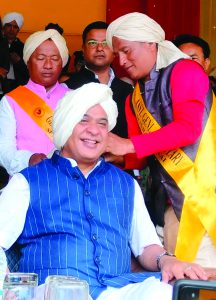
Adding to the significance of this year’s celebrations was the presence of Assam Chief Minister Himanta Biswa Sarma as the chief guest, along with Karbi Anglong Autonomous Council CEM Tuliram Ronghang, Deputy Chief Minister Sniawbhalang Dhar, ministers Lahkmen Rymbui, Sanbor Shullai and Wailadmiki Shylla, MDCs, the Deputy Commissioner and Superintendent of Police of West Jaintia Hills, leaders of Sein Raij Jowai including President H. Toi and Secretary A. Sumer, Dollois, invited guests and members of the public from different places.
Expressing his admiration, Sarma said, “I am very grateful that I was invited to witness this festival. Next year, I will come myself and jump into the pool with the people of Jowai.”
His remark drew loud applause from the large gathering around the sacred pool.
A light drizzle persisted through much of the day, but far from dampening spirits, it seemed to enhance the festive atmosphere. Devotees continued dancing in the muddy waters of Aitnar, embracing the rain as an auspicious blessing while spectators packed every available vantage point to witness the centuries-old rituals.
The climax at Aitnar also featured the traditional immersion of the rots and the sacred khnong, symbolising the triumph of good over evil and the community’s collective prayer for protection from epidemics, natural calamities and misfortune. The festival also includes the traditional Dat-Lawakor, a football-like game played with a wooden ball that is believed to foretell the prospects of the coming harvest.
Various government departments, including PWD, PHE, Police, Arts & Culture, Tourism, Planning and the North Eastern Council, extended support for the smooth conduct of the Behdienkhlam festival.
As the celebrations drew to a close on Thursday evening, Behdienkhlam once again reaffirmed its place not merely as a festival but as a living expression of the faith, identity and cultural resilience of the Pnar community.
