




In a state ruled by football, a quiet generation of hyper-intuitive players is drawing against international Grandmasters—and fighting an uphill battle to put the Northeast on the global chess map.
By Monojit Mandal
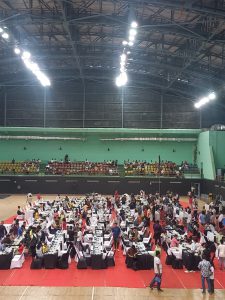 In the misty, windswept hills of Shillong and the sun-dappled stretches of the Garo Hills, the dominant sound of sports has always been the thunderous roar of a crowd cheering a football match. But beneath that loud surface lies a quieter, vastly more ferocious subculture. It is played across wooden tables in dimly lit rooms, community centers, and public parks—a war of pure intellect fought across 64 squares.
Every year on World Chess Day (July 20), national sports pages write familiar tributes to the structured chess academies of Chennai, Maharashtra, or Kolkata. Yet, hidden within Meghalaya’s pine-scented air is a story that defies traditional logic: a generation of raw, hyper-intuitive chess prodigies who routinely hold international Grandmasters and International Masters to jaw-dropping draws on a good afternoon—only to slide back into competitive obscurity by the following month.
They are the unrated slayers, the self-taught rebels, and the paradox of Indian chess. And their untold story reveals the true soul of sports in the Northeast.
Slaying titans
 To understand chess in Meghalaya, one must first forget how a modern chess prodigy is supposed to behave. In the elite commercial academies of mainland India, young players spend thousands of hours memorising 25 moves of computer-tested opening theory. They calculate like cold, digital engines.
Put those same machine-bound players across the board from a player from Shillong or Tura, however, and the scripts disintegrate.
“The uniqueness of our Meghalaya chess players is our raw playing style,” reveals Silkam A. Sangma, a FIDE-rated instructor from Tura who clinched the top prize in his rating category at the North East Championship. “We play without much theoretical knowledge. We rely far more on pure intuition, spatial creativity, and calculating long, sharp sequences on the fly.”
This raw instinct has produced moments of pure sporting poetry. Veteran state icons—men like Bah Gilford Thangkhiew, Bah Rijied Katrai, Bobby Lyngdoh, K. Pajat, and Silkam Sangma—have achieved what seems mathematically impossible for players lacking elite international coaching: they have drawn games against international Grandmasters and International Masters in national arenas.
“My personal experience is that Meghalaya players are extraordinarily flexible when playing off-theory openings,” notes Shillong-based player Anubhav Sharma. “When the national trend is to play deeply memorised lines, our players thrive in chaos.”
That fighting spirit isn’t limited to seasoned veterans; it is embedded in the state’s rising youth. Take the story of Roni Bar Rani, a fiercely passionate player from Golf Links, Shillong, whose journey feels less like a sports profile and more like an act of defiance.
“My parents never allowed me to play chess,” Roni confesses. “I escaped my home many times just to play tournaments. But I never gave up. Chess taught me a lesson outside the board: when you lose your Queen, you feel like giving up, but your King is still alive. Life is the same—we lose pieces, but we don’t surrender until the game is won.”
That same unbroken resilience flows across the Garo Hills, where an entire household of four sisters—Mesaret, Aesara, Tzedacah, and Besorah Ch Momin—recently swept the winner’s trophies in their respective age categories at the Arunachal International Tournament. It shines in young prodigies like Advitiya AG, who conquered the State Under-12 Championship at the age of five, and young talents like Sachin Kumar, SagnikKandar, and Alisha Lyngdoh, who routinely shock higher-rated opponents on national stages.
Why, then, has this goldmine of raw intellect failed to produce a single homegrown Grandmaster or International Master?
The paradox
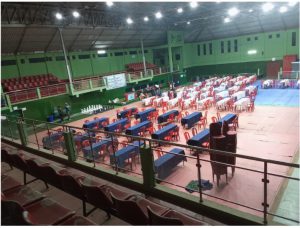 Ask the community directly, and a complex, brutally honest picture emerges—one split between personal discipline and systemic isolation.
“In our state, the problem often lies within the players themselves,” Roni Bar Rani admits with unfiltered candor. “After winning a category prize or beating a strong player, many don’t practice at all for a month. In other states, players return home from a tournament and immediately double their efforts. Here, overconfidence slips in, form drops, and in the next local event, they lose to an inexperienced beginner.”
Yet, blaming the players alone ignores a structural wall that no amount of individual willpower can scale: the sheer tyranny of distance and finance.
To earn International Master (IM) or Grandmaster (GM) norms, a player must compete continuously in FIDE-rated classical tournaments. But the nerve centers of Indian chess are located thousands of kilometers away in Southern and Western India.
“The primary bottleneck is geographical isolation,” explains Sachin Kumar, a top player from Tura. “For a player in Meghalaya to gain a serious FIDE rating, they must travel long distances. When you add the cost of travel, hotel stay, and entry fees for a parent and child, it becomes financially unsustainable for middle-class families.”
“Becoming a titled player is a very expensive venture,” seconds Anubhav Sharma. “Without government travel grants or corporate sponsorships, talented players simply hit a financial ceiling and quit.”
Furthermore, chess in Meghalaya continues to fight a quiet war for recognition in the shadow of team sports.
“Chess is a quiet, cognitive sport played indoors,” Sachin points out. “It lacks the immediate spectacle of a local football match and is often misclassified as a mere recreation rather than a rigorous psychological sport requiring peak stamina.”
Silkam Sangma points to tangible disparities in state incentives:
“Recently, a bronze medalist in rowing was promised a government job. If the same promise were given to chess players for podium finishes at the nationals, our players would work twice as hard to bring home medals.”
Engines, algorithms, and new leadership
Despite these challenges, a quiet revolution is currently underway, driven by a blend of dedicated local leadership and digital technology.
 Under the leadership of Meghalaya Chess Association (MCA) General Secretary K. Pajat—who doubles as an active competitive player and mentor—the state’s chess calendar has transformed:
The landmark 1st Meghalaya International GM Open brought international Grandmasters directly to Shillong soil.
 Elite coaching initiatives, including workshops led by International Master Sagar Shah (founder of ChessBase India), provided local talents with rare access to top-tier mentorship.
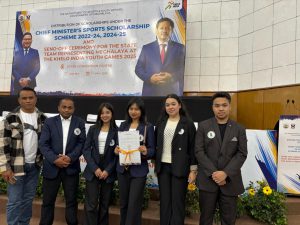
The state government recently sponsored young players to compete in national age-category school championships—a historic first.
 Simultaneously, the digital age has broken down Meghalaya’s geographical barriers. Platforms like Chess.com and Lichess, paired with AI analysis tools like Stockfish, have democratized top-tier chess education.
“Online tools have been the ultimate equalizer for us,” explains FIDE-rated player Gargee Chakravarty. “A young player in a remote village can now study the exact same opening theories and database lines as someone in Chennai or Europe. AI helps us spot mistakes instantly.”
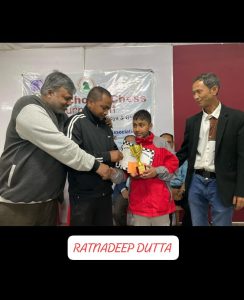
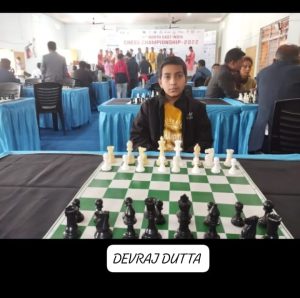
However, players like Ratnadeep Dutta and Devraj Dutta emphasise that digital screens can only go so far:
“AI engine analysis is incredible for preparation, but it can never replace the raw psychological pressure of sitting face-to-face across a board in a high-stakes, classical over-the-board tournament.
Vision 2035
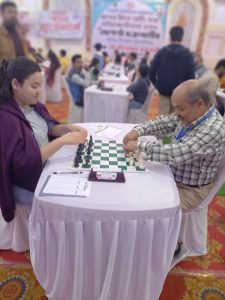
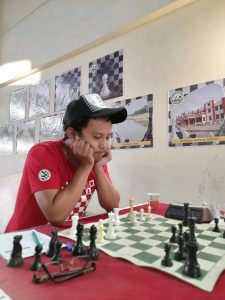 If neighboring Assam can produce its first Grandmaster in Mayank Chakraborty, Meghalaya’s players believe their state can do the same—provided the ecosystem adapts over the next five years.
Interviewing players across districts reveals a consensus on what must happen next:
Grassroots School Integration: Introduce chess as an official, structured sport in primary schools across all districts. As Gargee Chakravarty and Anubhav Sharma point out, chess builds problem-solving, discipline, and spatial intelligence that directly boost academic performance in science and mathematics.
Permanent High-Performance Academies: Establish a state-funded chess academy offering structured masterclasses with visiting International Masters and Grandmasters at least twice a year.
Annual Rated Tournaments & Travel Grants: Make the ShillongInternational Open an annual fixture, and create direct travel subsidies so financial hardship never forces a talented prodigy to retire early.
Beyond the 64 Squares
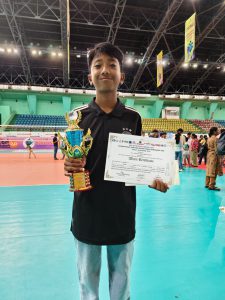 When you ask these players what chess has given them, none of them lead with Elo ratings or trophies. They talk about character.
They talk about patience—a virtue highlighted by SilkamSangma and Anubhav Sharma, who remind us never to rush when holding an advantage. They talk about accountability—the sobering realisation that once a piece is released, you cannot take the move back, and you alone must live with the consequences of your decision.
Meghalaya’s chess community is done being an overlooked underdog story. The raw, fighting talent is alive inside the young kids who escape their homes to play, the sisters sweeping trophies in the hills, and the veterans who refuse to surrender their Kings.
If the state, private sponsors, and sports authorities back these silent warriors today, 2035 will not merely mark the arrival of Meghalaya’s first Grandmaster. It will mark the moment the misty hills of the North East are recognised as one of the fiercest powerhouses in Indian chess.

